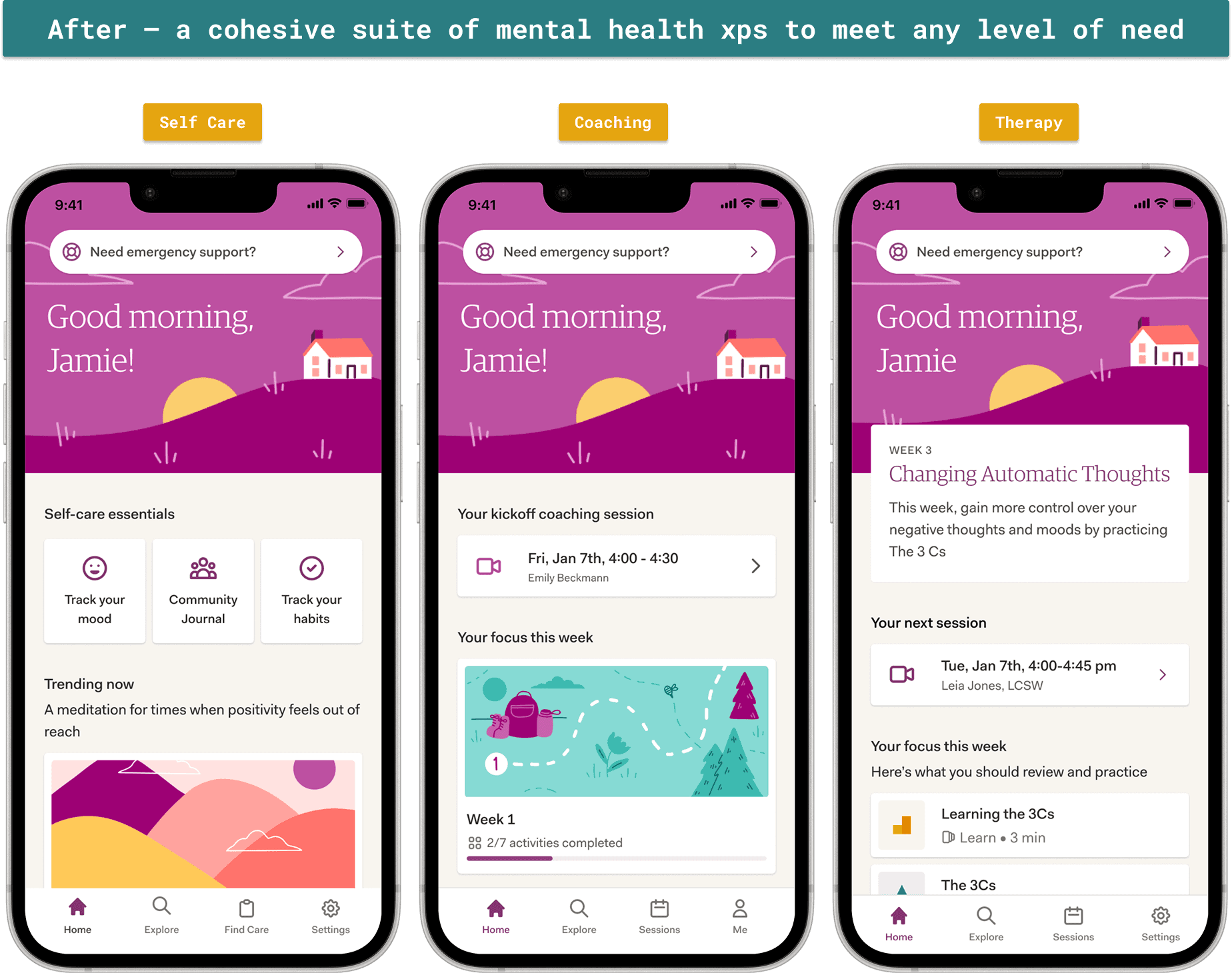
Consolidated three behavioral health products into a unified platform experience — simplifying care journeys while reducing platform complexity & engineering overhead.

Context
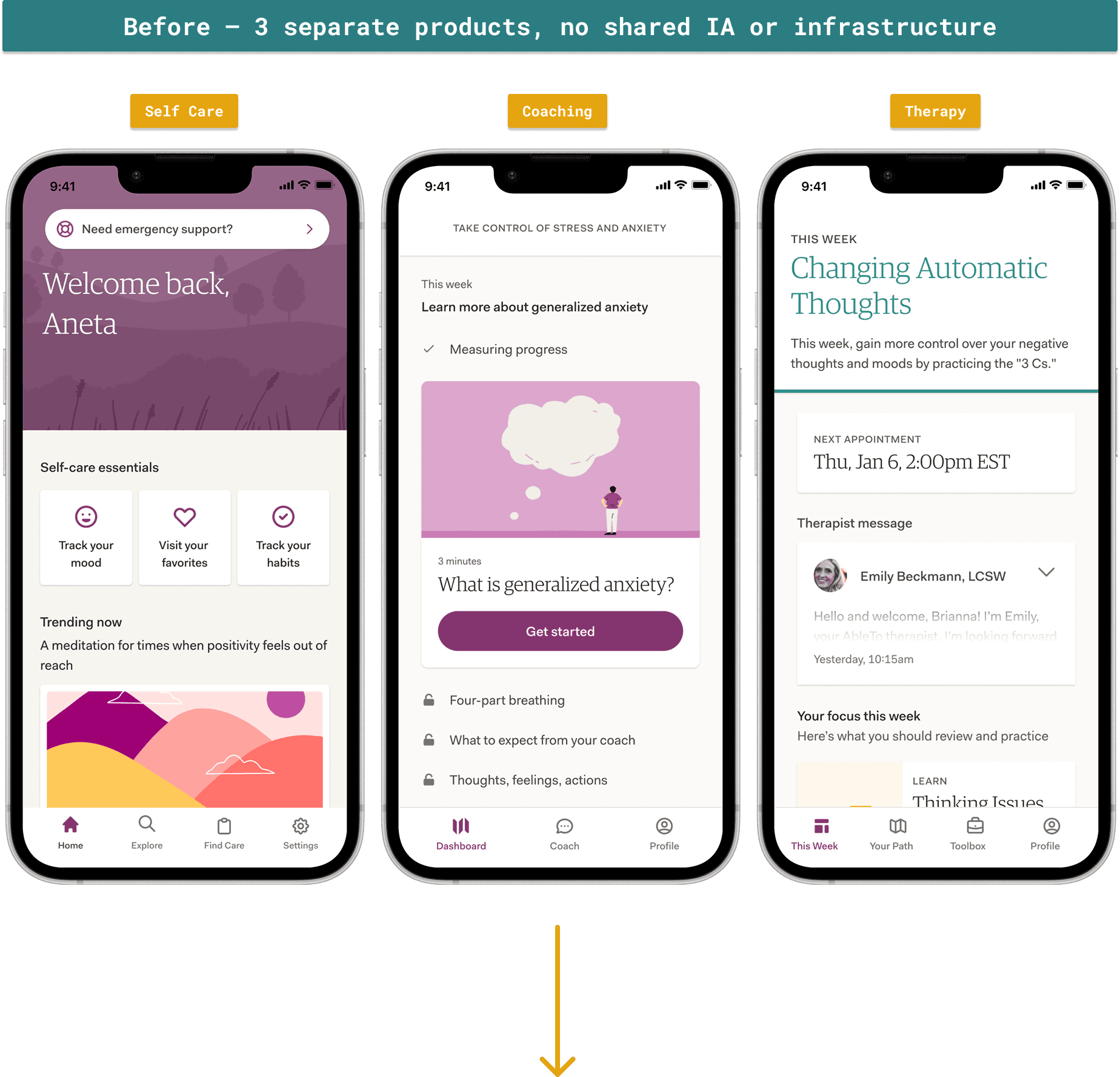
AbleTo offered three digital mental health care programs — self care, coaching, and therapy — each with its own separate product experience. Coaching and therapy provided 8 weeks of virtual provider-led care; self care a newly created foundational, self-guided experience.
Because the three products lived as disconnected experiences, participants couldn't easily move between them as their needs changed — most critically, therapy participants had no way to seamlessly maintain their gains once provider-led care ended.
Role: Lead Product Designer for Therapy Products
Team: Product · Engineering · Clinical · Self Care + Coaching Design Teams
Scope: Information Architecture · UX/UI · Design Systems · CMS
The challenge
There was a strong vision for a unified product experience built around a universal information architecture, but no clearly defined goals or requirements yet to execute against. As lead designer for therapy products, I was responsible for turning that vision into a validated, shippable design. Two statements shaped the work:
"How can members keep making progress after their 8-week therapy program ends?"
"We want participants to be successful in whatever program they're in"
What I did
Defined shared goals — partnered with design and product leaders to document the business and user goals the unified vision was missing
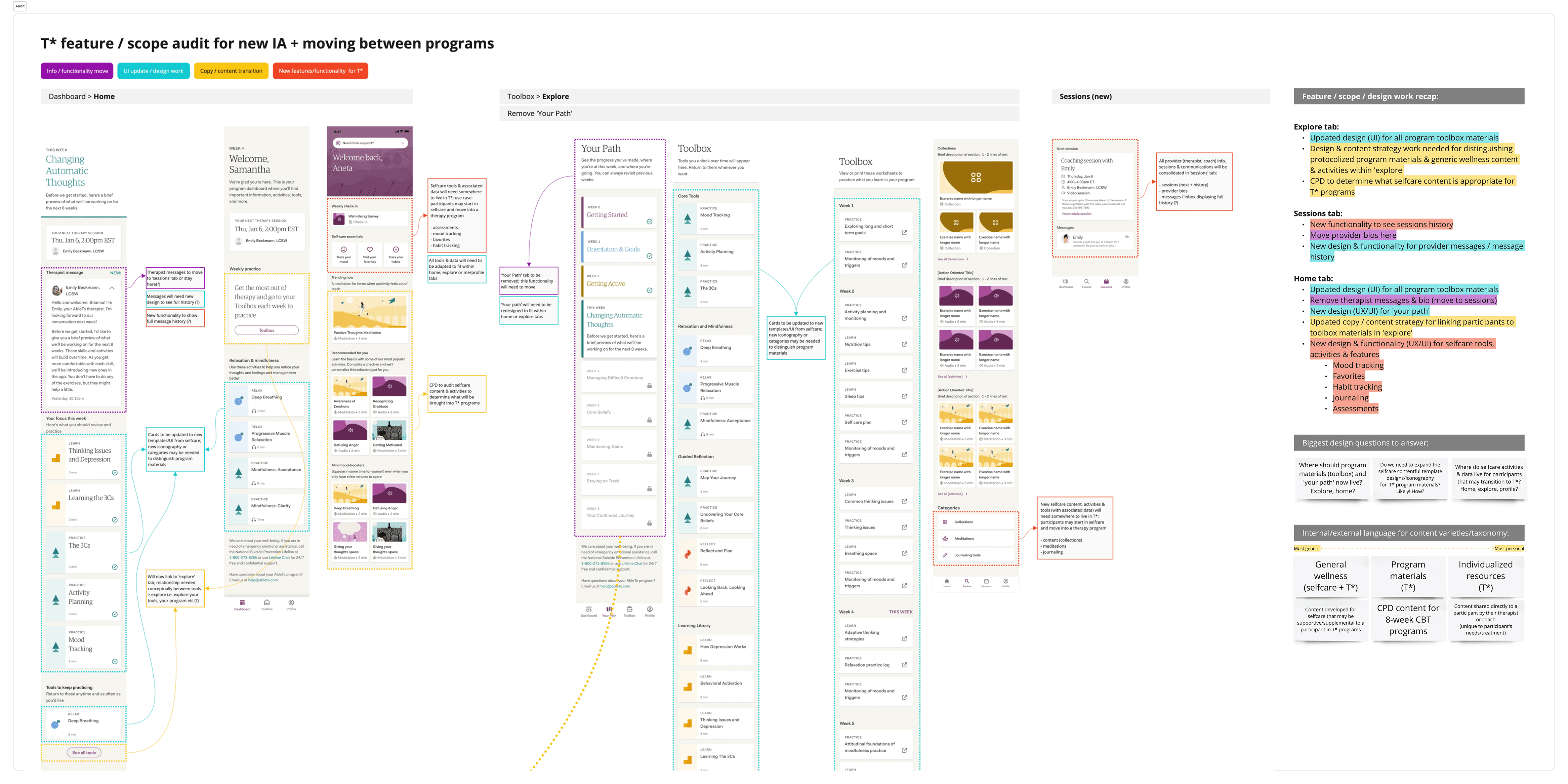
Audited every current-state experience across all three therapy program variants (T+, T360, Depression Interactive) to scope the true UX, UI, and content impact of unification
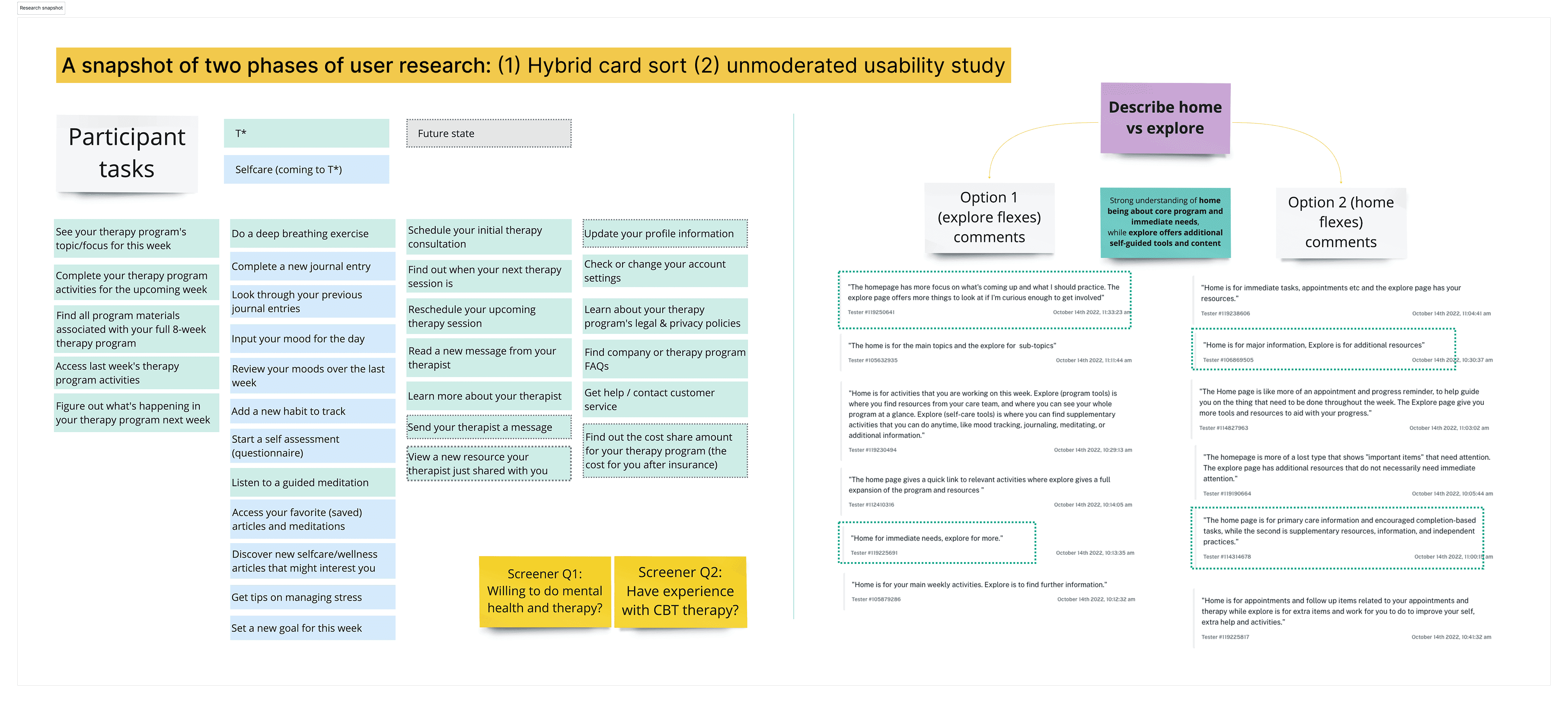
Evaluated the new IA with a hybrid card sort study covering 30 core therapy tasks and incoming self-care functionality
Tested two divergent concept models for the new therapy digital experience via unmoderated Maze studies across 6 core tasks — the winning concept had a lower time-on-task and one fewer click to completion on every task tested
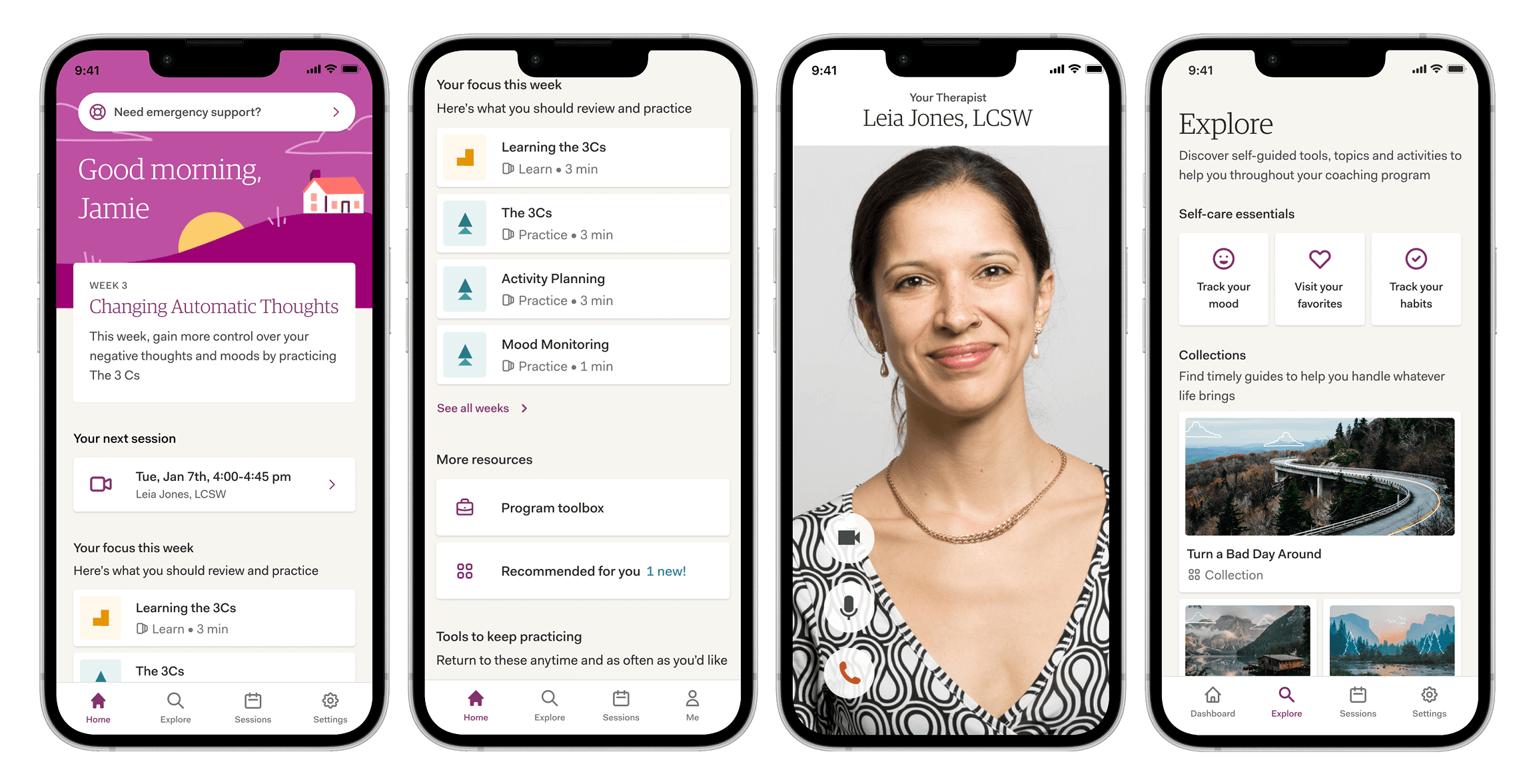
Rebuilt the UI system, adapting the self-care team's new activity card components for therapy and designing two new card types (informational, appointment), while migrating all program content to Contentful for shared, low-effort updates across the consumer product teams
Outcomes + reflection
Delivered over 100 screens covering every therapy program variant, web and app experiences, and multiple program states (welcome, cancelled, graduated, and more).
This was, at its core, an enablement project:
Enabled participants to seamlessly move between programs as their needs changed — supporting better long-term mental health outcomes instead of a hard stop when provider-led care ended
Enabled the clinical team to operate independently — the move to Contentful CMS reduced dependency on engineering, letting clinical partners develop and update behavioral health programs on their own
Reduced operational cost by consolidating three separate products onto one shared platform and CMS, cutting the dev/eng resourcing previously needed to maintain them individually
This project reinforced how much of design work can be unglamorous groundwork — auditing real variation across products, validating architecture before building on top of it, and testing concepts against real behavior instead of preference. The bigger win wasn't just a better interface; it was building a platform other teams could build on far into the future.