Designed a scalable notifications ecosystem spanning 135+ visit types, delivering more timely, personalized communication across all member touchpoints.

Context
MinuteClinic was shifting from walk-ins to a 100% scheduled appointment model — with the pandemic pushing most patient engagement to mobile overnight. Email and SMS became the primary channels carrying the entire pre- and post-visit experience, but notifications had never been designed as a system: no documentation existed for what was live, how messages were triggered, or where the logic lived in the backend.
Role: Lead Product Designer
Team: Product · Engineering · Content Strategist
Scope: Content Strategy · Service Design · Systems Design
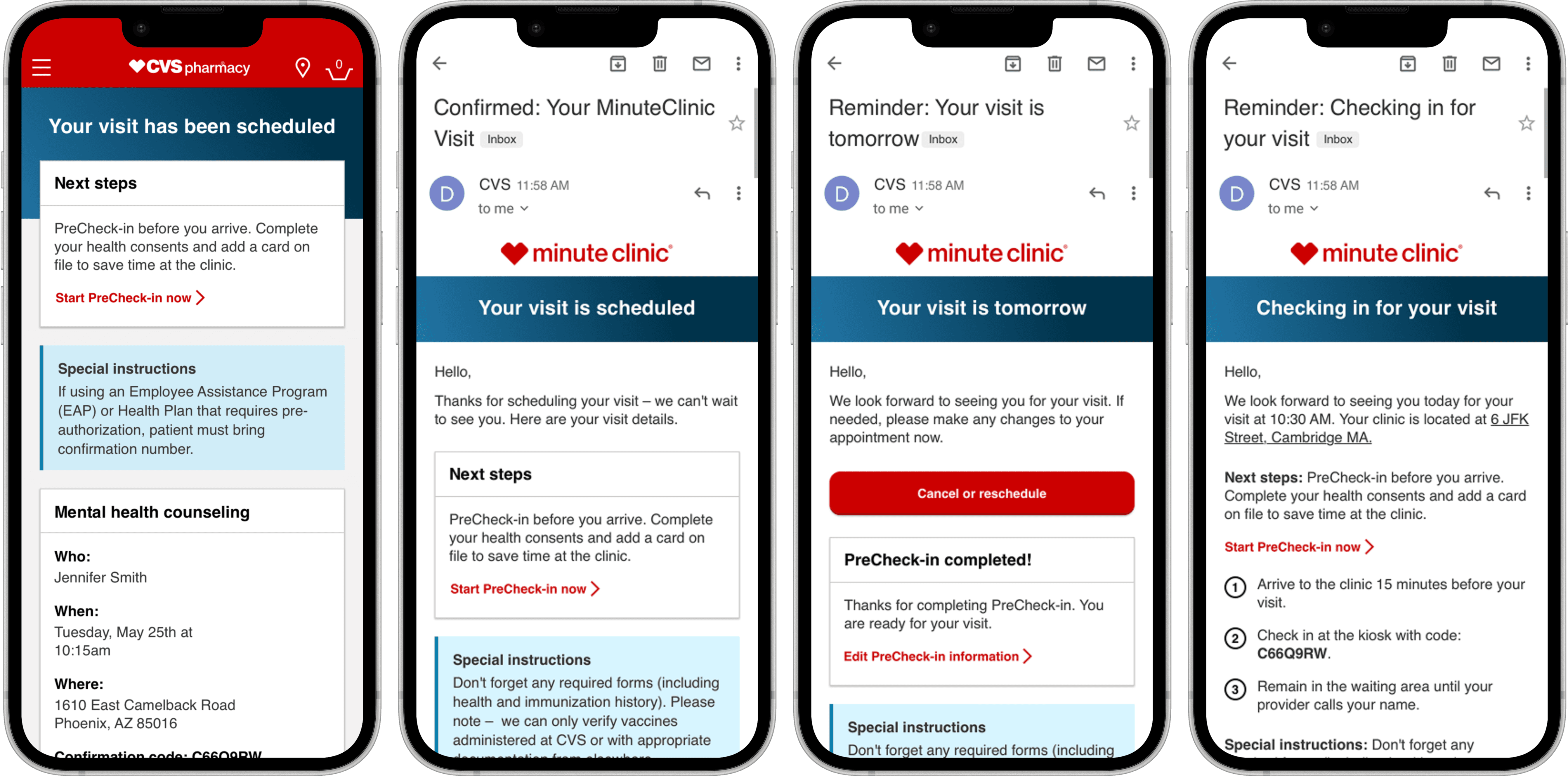
The Current-State Gaps
No end-to-end documentation existed for the notifications ecosystem — what fired, when, and from where
Confirmation codes were easy to lose, with no way to recover them
Instructions were generic, causing patients to arrive unprepared (missing paperwork, not fasting)
Missing basics like "add to calendar" created avoidable friction
The same painpoints were hitting clinicians too — patients unable to check in would knock on exam room doors mid-appointment for help
To fix this, I first mapped the existing ecosystem end-to-end, then aggregated patient and clinician pain points from OpinionLab feedback, our Voice of Customer team, and clinician testimonies — building the first real picture of where the experience was breaking down.
What I Designed
A dynamic notifications framework built around four key moves:
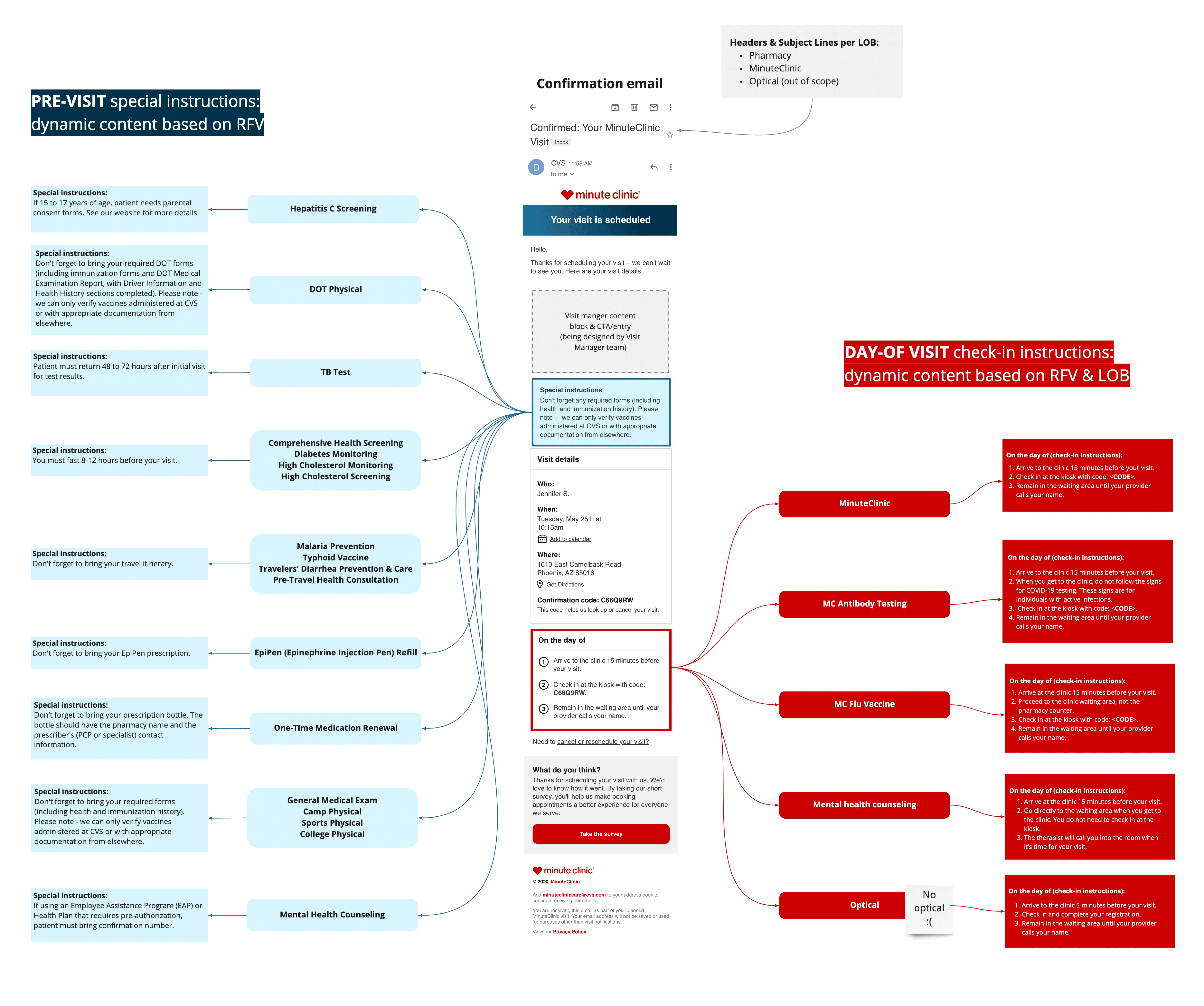
A documented ecosystem map: The first artifact of its kind — every trigger, channel, and backend source, giving product and engineering a shared reference that didn't exist before
Dynamic, visit-specific content: Partnered with a content strategist to distill 135+ visit types across three business units into tailored instructions — all routed through clinical and legal review
SMS → MMS migration: Advocated for and designed the shift to MMS, giving complex visit types room for clear, readable instructions without sacrificing scannability
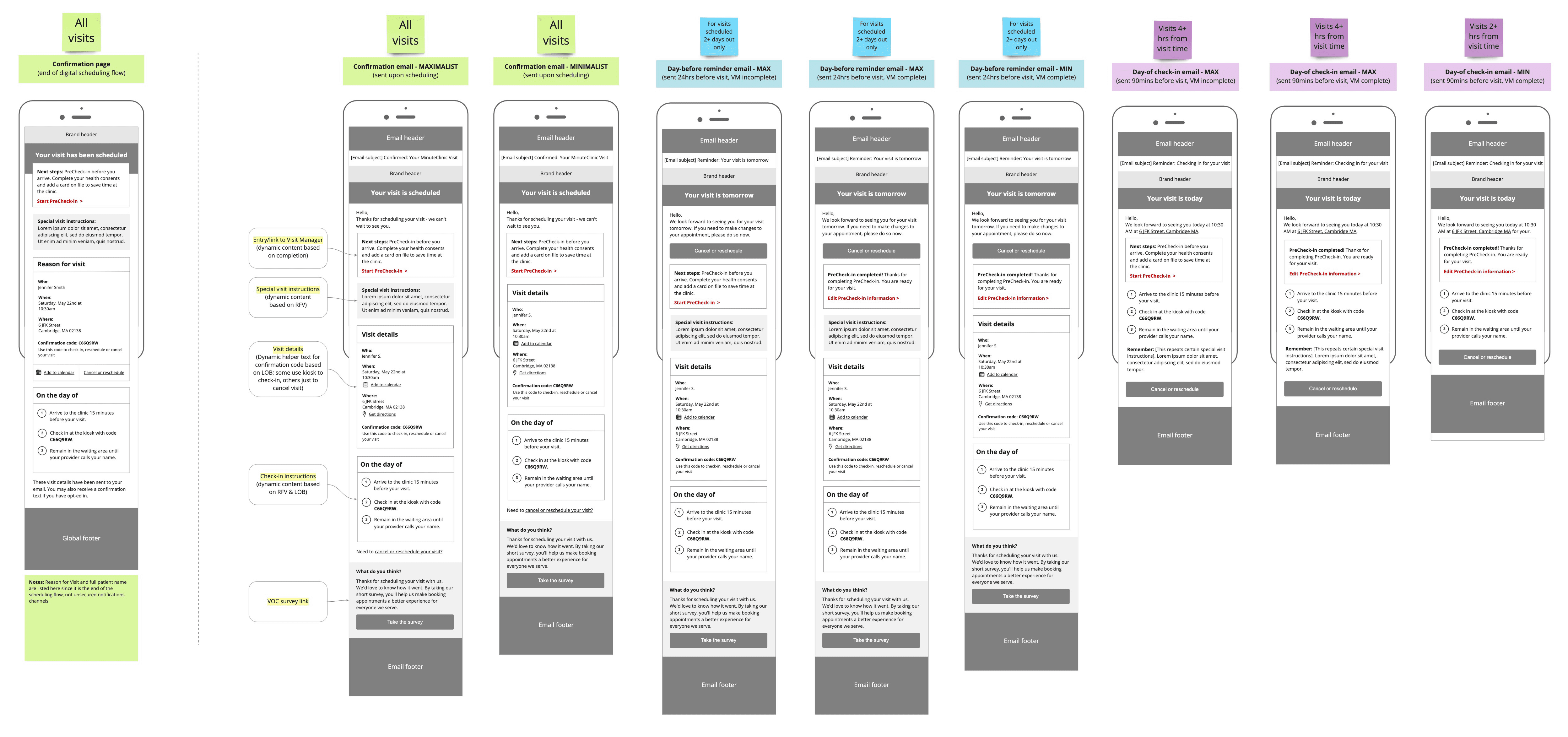
A designed set, not isolated messages: Wireframed and iterated on the full notification sequence as one system, so individual emails and texts worked together across the patient journey rather than in isolation

Outcomes + Reflection
This project reinforced that some of the most impactful design work happens outside of the primary product surfaces. Communication is infrastructure. Well-designed systems can make care feel significantly more coordinated, proactive, and trustworthy.
Scaled communications across 135+ visit types
Established a reusable foundation for future communication experiences
Improved patient preparedness and efficiencies for clinic visits
Reduced in-person clinician disruptions for check-in related queries